The Content Framework: How to Write Your Website Words Without Getting Stuck on a Blank Page

Key Takeaways
Website delays almost always happen because business owners get stuck writing their own copy.
Effective copywriting isn't about listing facts; it's about framing your business around your client's needs.
Breaking your copy into small, bite-sized components eliminates the fear of the blank page.
Structured preparation files remove the guesswork from mapping out your home, about, and services pages.
AI tools can act as an instant sounding board to clarify your thoughts before design begins.
You know your business inside out.
You live it every day, you serve your clients with immense care, and you could talk about your passion for hours in person.
But the moment you sit down to write the words for your new website? Total freeze.
The cursor blinks on a blank white screen, and suddenly, describing your "About Me" page or summarizing your premium services feels like climbing a mountain. You aren't alone. In the web design world, content creation is the number one reason beautiful projects get delayed.
It is incredibly difficult to write about yourself.
We try to be poetic, we try to sound corporate, or we overthink every single comma until we give up entirely.
But here is the secret: your website copy doesn't need to be a literary masterpiece. It just needs to be a clear, strategy-first framework that speaks directly to your ideal reader.
Here is how to break through the writer's block and organize your business thoughts without the overwhelm:
1. Shift from "me-first" to "customer-first"
When we get stuck writing, it's usually because we are trying to list everything we do.
Instead, flip the lens. Your website visitors don't actually care about a chronological list of your history; they care about how you can solve their specific problem.
Instead of writing "We offer luxury coaching," ask yourself: What transformation does my client feel after working with me? What is keeping them awake at night? When you answer those questions, your headlines and paragraph copy practically write themselves.
2. Use a structured template to gather information
The blank page is terrifying because it has no boundaries.
At The Forest, we never expect our clients to just hand us a loose document of text. Instead, the moment we agree to work together, we share our custom Content Preparation Files.
Think of these files as a gentle, guided roadmap. They don't ask you to "write copy." Instead, they ask you targeted questions about your offers, your ideal clients, and your core values. By simply filling in the blanks of a structured framework, you seamlessly generate all the raw ingredients your website needs to succeed.
3. Talk it out with a digital sounding board
Sometimes, the best way to write is to actually stop typing and start talking.
If you are struggling to find the right, sophisticated tone for your lifestyle brand, using an intelligent tool to bounce ideas off of can change everything.
Expressing your raw thoughts out loud or typing a messy paragraph into a strategic partner tool allows you to refine your messaging, iron out the fluff, and build a cohesive narrative long before your design layout even begins.
FAQs
Is it okay to use only stock photography on a premium website?
While you can build a beautiful foundation using highly curated, editorial stock imagery, we always recommend weaving in at least a few authentic photos of yourself or your actual process. It grounds the site and builds personal trust.
How do I make sure different photo sources don't look messy together?
The key is a strict brand color palette. When choosing or shooting images, make sure they all share similar underlying tones (such as warm neutrals, cool grays, or soft moody shadows) so they feel like they belong in the same gallery.
What if I am completely uncomfortable in front of a camera?
You don't have to post endless headshots. Beautiful brand imagery can focus on your hands at work, your workspace details, your tools, or the environments that inspire you. Showing your process is just as powerful as showing your face.

Final thoughts
Writing your website words shouldn’t feel like an administrative punishment.
It is a beautiful opportunity to step back, look at the business you’ve built, and clarify exactly why your services are worth a premium price tag.
When you stop treating your copy like a giant essay and start treating it like a helpful conversation with your favorite client, the words begin to flow naturally.
Give yourself the space to be messy in the first draft. With the right structure and a clear framework, everything else falls perfectly into place.
What to do next
If you want to see exactly how a high-converting page should be structured before you even write a single line, we have a resource for you.
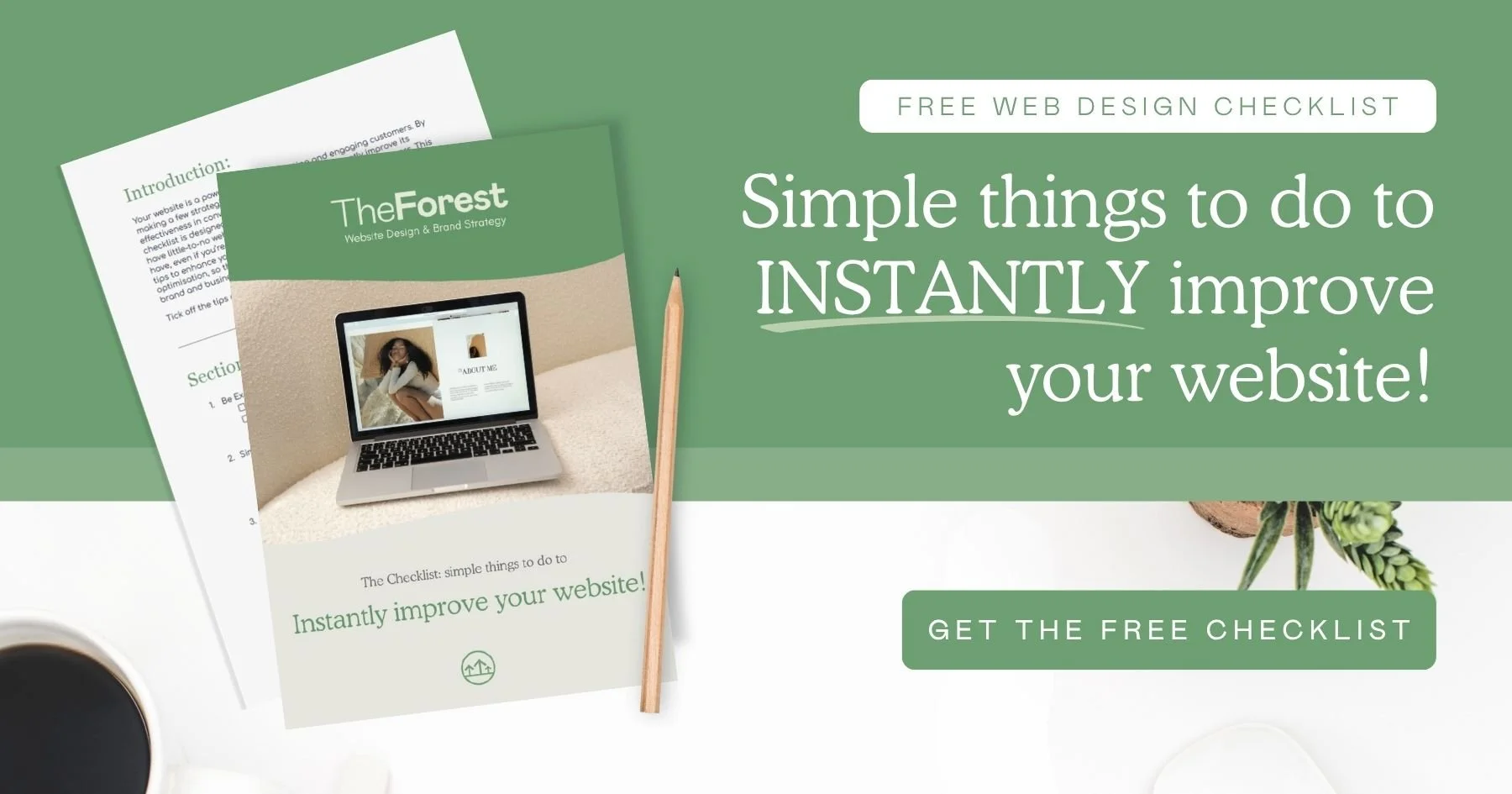
→ Download our Free Web Design Checklist to see how a strategic layout aligns with your messaging to build instant consumer trust.
And if you want a strategic, expert-trained companion to help you unpack your ideas and iron out your message right now, you don't have to wait.
→ Get early access to The Brand Clarity Coach AI, our custom-built brand strategist designed to help you sharpen your content 24/7 before our July 2026 website design cohort kicks off.
This article was written with the help of The Brand Clarity Coach — an AI assistant created by Teresanne O’Reilly to help business owners and marketers define their brand strategy, sharpen their message, and create content that connects with their ideal customers.
Use The Brand Clarity Coach in your own business. Get instant lifetime access here for just €89.
You Might Also Like